The Swerve of the Thing
I felt as if Ginsberg’s assertion in the last video clip that “‘no ideas but in things’ means that there's no God, basically” was a little glib, so I decided to take yet another dive into Williams’ materialist (but perhaps crypto-theological) apothegm, this time via Slavoj Zizek, who has been, since his appearance on the scene, the philosopher of the “Thing,” and who has recently taken up the project of “thinking the subversive deadlock of monotheism through to the end.” (71) I find a lot of chance points of intersection in Chapter 3 of The Puppet and the Dwarf with various readings of Paterson, especially Zizek’s reevaluation of Freud’s notion of psychic automata and traumatic blockage. What follows may be more my riffing than a close reading, as can be only possible in this constrained space.
Firstly, those “thousand automata” of Paterson “who neither know their sources nor sills of their/ disappointments,” may in the end, be better materialists than Williams is; the language fails them, but they operate fine, and are the body of the demos. They are Paterson. Williams, in contrast, posits himself as alienated demiurge of the things he sees—the things emerge from him and the Falls rather than just sitting there like the green bottle glass. Poet is trumped by the people, and like them may also be an epiphenomenon of the Falls, which are, in turn, a better, natural geist that animates all the automatons. Can Williams get from geist to mere gist, thus overcoming the oversoul that haunts his search for the thing (although becoming Christ in the end?), or will he always miss this encounter in his deadlock with the people of Paterson?
The Falls may be what Zizek (citing Jonathan Lear) calls an “enigmatic term”: a seductive, empty concept that keeps a traumatic inconsistency from true consciousness. They are not “false” per se, but are structurally important placeholders for opacity, blockage, and the impenetrability of the Other’s desire, to use his terms. What’s important is that, in this reading, the Falls are not a stand-in for the Real as the thing-in-itself beyond the grasp of language—the flow, the noise, the movement towards death, etc. Rather, they mark the blockage and inconsistencies of the Paterson-system: “this Real . . . is not the inaccessible Thing, but the gap that prevents our access to it.” (78) This gap may be the all important antagonism between the poet who individually sings the city and the multitude that does not hear the song, so Williams is hep when he sings the blockage, but not when he makes the Falls an allegory for the flow behind appearances. There is no flow, only these blockages. There is no crossing the gap of the structural antagonisms, and this realization—the materialism of Williams—is paradoxically when he is most Christian, according to Zizek: “It is the very radical separation of man from God that unites us with God, since, in the figure of Christ, God is thoroughly separated from himself—thus the point is not to ‘overcome’ the gap that separates us from God, but to take note of how this gap is internal to God Himself” (78) We could say that Williams’ separation is incomplete—perhaps because of his Unitarian shilly-shallying with the divine—and, to end with a Zizekian doosy, it is only, then, the Jewish poet Ginsberg who can then become the Christian God.
Zizek makes a rare reference to poetry (Plath’s “The Other”) at the end of this chapter, which makes me think it is an apt one for these meditations. Here’s another good quote from this chapter for the poetics grab-bag:
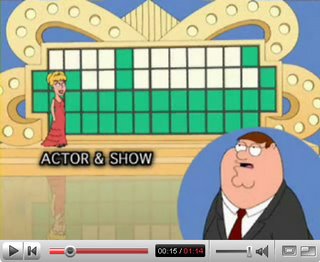
Or if you are completely bored by all this, here’s his dirty joke about tennis.
Firstly, those “thousand automata” of Paterson “who neither know their sources nor sills of their/ disappointments,” may in the end, be better materialists than Williams is; the language fails them, but they operate fine, and are the body of the demos. They are Paterson. Williams, in contrast, posits himself as alienated demiurge of the things he sees—the things emerge from him and the Falls rather than just sitting there like the green bottle glass. Poet is trumped by the people, and like them may also be an epiphenomenon of the Falls, which are, in turn, a better, natural geist that animates all the automatons. Can Williams get from geist to mere gist, thus overcoming the oversoul that haunts his search for the thing (although becoming Christ in the end?), or will he always miss this encounter in his deadlock with the people of Paterson?
The Falls may be what Zizek (citing Jonathan Lear) calls an “enigmatic term”: a seductive, empty concept that keeps a traumatic inconsistency from true consciousness. They are not “false” per se, but are structurally important placeholders for opacity, blockage, and the impenetrability of the Other’s desire, to use his terms. What’s important is that, in this reading, the Falls are not a stand-in for the Real as the thing-in-itself beyond the grasp of language—the flow, the noise, the movement towards death, etc. Rather, they mark the blockage and inconsistencies of the Paterson-system: “this Real . . . is not the inaccessible Thing, but the gap that prevents our access to it.” (78) This gap may be the all important antagonism between the poet who individually sings the city and the multitude that does not hear the song, so Williams is hep when he sings the blockage, but not when he makes the Falls an allegory for the flow behind appearances. There is no flow, only these blockages. There is no crossing the gap of the structural antagonisms, and this realization—the materialism of Williams—is paradoxically when he is most Christian, according to Zizek: “It is the very radical separation of man from God that unites us with God, since, in the figure of Christ, God is thoroughly separated from himself—thus the point is not to ‘overcome’ the gap that separates us from God, but to take note of how this gap is internal to God Himself” (78) We could say that Williams’ separation is incomplete—perhaps because of his Unitarian shilly-shallying with the divine—and, to end with a Zizekian doosy, it is only, then, the Jewish poet Ginsberg who can then become the Christian God.
Zizek makes a rare reference to poetry (Plath’s “The Other”) at the end of this chapter, which makes me think it is an apt one for these meditations. Here’s another good quote from this chapter for the poetics grab-bag:
It is not that we need words to designate objects, to symbolize reality, and that then, in surplus, there is some excess of reality, a traumatic core that resists symbolization—this obscurantist theme of the unnameable Core of Higher Reality that eludes the grasp of language is to be thoroughly rejected; not because of a naïve belief that everything can be nominated, grasped by our reason, but because of the fact that the Unnamable is an effect of language. We have reality before our eyes well before language, and what language does, in its most fundamental gesture, is—as Lacan put it—the very opposite of designating reality: it digs a hole in it, it opens up the visible/present reality toward the dimension of the immaterial/unseen. When I simply see you, I simply see you—but it is only by naming you that I can indicate the abyss in you beyond what I see. (70)
Or if you are completely bored by all this, here’s his dirty joke about tennis.
Labels: blocked, Christianity, comedy, Jacques Lacan, materiality, no ideas but in things, radiant gist, Slavoj Zizek, Sylvia Plath, the falls, the real, thousand automatons
posted by Joe Milutis at 12:09 AM
1 comments